Review: FSL Lace Masquerade Mask Design
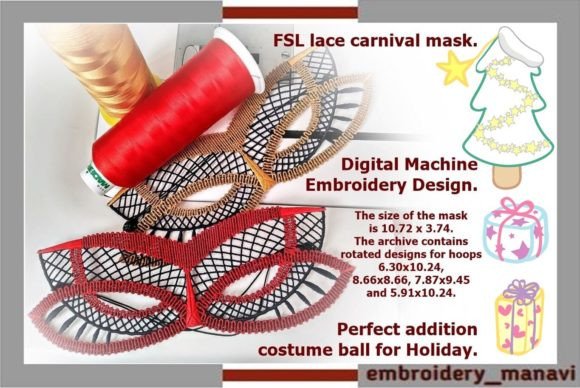
As a designer who has spent countless hours staring at stitch maps and troubleshooting tension issues, I approach every new machine embroidery design with a mix of curiosity and skepticism. We all know that digital previews can be deceiving. A design might look flawless on a screen but turn into a bird’s nest of thread breaks and puckering on actual fabric. Recently, I had the opportunity to evaluate the FSL Lace Masquerade Mask, an in-the-hoop face mask embroidery design intended for Venetian-style masquerades. Here is my practical assessment of how this embroidery file holds up in real-world production scenarios.
First Impressions and Visual Personality
The immediate appeal of the FSL Lace Masquerade Mask lies in its thematic versatility. It captures the mysterious, elegant mood associated with costume balls, yet it remains accessible enough for casual holiday fun. The layout suggests a balance between structural integrity and decorative flair, which is critical for Free Standing Lace (FSL) projects. Unlike flat applique designs that rely on a fabric background, FSL requires the thread itself to create the structure. This means the density and placement of every satin stitch and fill stitch are paramount.
Visually, the design evokes a sense of celebration. It fits naturally into the Holidays Celebrations category, serving as a perfect accent for New Year’s Eve parties, Halloween costumes, or even whimsical Christmas decor. For a small business owner or Etsy seller, this visual personality translates directly into marketability. It is not just a shape; it is a prop that invites interaction and photography, which is essential for social media engagement.
Real-World Application and Project Fit
To truly test the viability of this design, I considered how it would perform in various commercial and personal contexts. While the product description highlights its use as a standalone mask, creative entrepreneurs often look for ways to integrate such assets into broader product lines. Imagine pairing this mask with a custom tote bag design for a theater group or using it as a focal point for a boutique holiday gift set.
For those running a craft business, the potential extends beyond the mask itself. You could use elements of the lace pattern to create coordinating embroidered patches for jackets or caps. The intricate nature of the lace adds perceived value to any handmade product. If you are selling custom apparel, consider how this motif might look as a subtle chest emblem on a black sweatshirt, though scaling would be necessary. The key is recognizing that this is a statement piece. It demands attention, so it works best when it is the hero of the embroidery project.
Performance on Different Materials
One of the most critical aspects of reviewing an embroidery file is understanding its relationship with fabric. Since this is an FSL design, it does not sit on top of fabric in the traditional sense, but the choice of stabilizer and thread plays a massive role in the finished product. I recommend testing the design with water-soluble stabilizer to ensure clean removal without residue. Any leftover sticky residue can ruin the delicate lace effect, making the item feel cheap rather than luxurious.
If you plan to incorporate this mask into a larger assembly, such as attaching it to a headband or a pillow cover for nursery decor, pay close attention to the edges. FSL designs can have fragile borders if the stitch density is too low in those areas. Ensure that the connecting bridges in the lace are robust enough to withstand handling, especially if the end user is a child or if the item will be part of a active costume.
Technical Considerations for Designers
Before committing to a large batch of production, there are several technical checks you must perform. First, verify the hoop size requirements. In-the-hoop designs often require specific hoop dimensions to accommodate the folding and stitching process. Attempting to force a design into a smaller hoop than specified will result in misalignment and wasted materials.
Second, analyze the thread colors. While FSL is often done in monochrome white or ivory for a classic lace look, experimenting with metallic threads can enhance the masquerade theme. However, metallic threads are more prone to breaking. If you choose this route, slow down your machine speed and use a needle designed for metallics. Contrast is also vital; if you are creating a printable mockup for your online shop, ensure the digital representation accurately reflects the sheen and texture of the actual thread.
Third, inspect the small details. Zoom in on the digital file to check for tiny, isolated stitches that may not hold well. These micro-details can cause thread nests or breakages during high-speed stitching. A good digital embroidery file should have optimized pathing to minimize jumps and trims, which speeds up production time—a crucial factor for small shop products where efficiency equals profit.
Commercial Viability and Brand Consistency
For commercial embroidery professionals, consistency is king. The FSL Lace Masquerade Mask offers a high level of sophistication that can elevate a brand’s image. When customers see intricate lacework, they associate it with quality and care. This perception builds trust and encourages higher price points. However, you must ensure that the quality of your stitching matches the intricacy of the design. Sloppy tension or poor stabilizer choice will undermine the professional look you are trying to achieve.
Consider your target audience. Are they looking for a personalized gift or a durable everyday item? This design leans towards special occasions. It is ideal for clients seeking unique items for weddings, galas, or themed parties. It may not be suitable for items requiring frequent washing, as FSL can be delicate. Be transparent with your customers about care instructions to maintain satisfaction and reduce returns.
Final Verdict and Practical Advice
The FSL Lace Masquerade Mask is a strong contender for designers looking to expand their design assets in the holiday and costume niche. It offers a blend of elegance and fun that resonates with a wide audience. However, success depends on execution. Do not skip the test stitch phase. Use scrap fabric and your intended stabilizer to run a full test. Check the flexibility of the lace after removing the stabilizer. Ensure it holds its shape without being too stiff or too flimsy.
Also, always confirm the licensing terms before selling finished products or using the design in commercial projects. While many digital sellers allow commercial use of finished items, restrictions may apply to sharing the file itself. Respect intellectual property to maintain a reputable standing in the maker community.
In summary, this design is a valuable tool for creative entrepreneurs who understand the nuances of FSL embroidery. It requires skill and attention to detail, but the result is a stunning, tactile product that stands out in a crowded marketplace. Whether you are creating a single personalized gift or a line of boutique merchandise, the FSL Lace Masquerade Mask delivers the visual impact needed to captivate your audience.