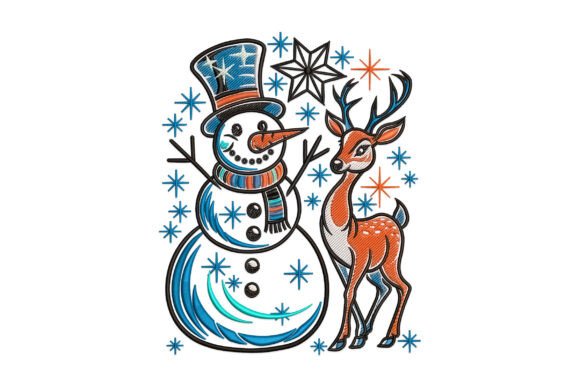
Snowman and Reindeer Winter: A Designer’s Review
As an embroidery designer who has spent years digitizing patterns and testing them on everything from delicate baby onesies to heavy denim jackets, I approach every new machine embroidery design with a critical eye. It is not enough for a pattern to look cute on a screen; it must hold up under the needle, translate well across different fabrics, and ultimately satisfy the end customer. Recently, I had the chance to evaluate Snowman and Reindeer Winter, a festive piece that promises to spruce up fabrics with a captivating touch. Here is my honest assessment of how this design performs in real-world applications.
First Impressions and Visual Personality
The first thing that strikes you about Snowman and Reindeer Winter is its balanced composition. In the crowded market of holiday embroidery, it is easy to find designs that are either too cluttered or too sparse. This design manages to find a sweet spot. The interplay between the snowman and the reindeer creates a narrative scene rather than just two isolated icons floating in space. The mood is lively and creative, bringing a distinct personality to any item it adorns.
From a technical standpoint, the layout suggests a thoughtful approach to stitch placement. The shapes are clean, which is crucial for maintaining clarity when the design is scaled down for smaller items like pockets or cuffs. The visual personality feels warm and inviting, making it an excellent candidate for products intended to evoke comfort and nostalgia. For those of us running a craft business, this emotional connection is what drives sales.
Real-World Application: The Tote Bag Test
To truly understand the value of an embroidery file, you have to put it to work. I decided to test Snowman and Reindeer Winter on a canvas tote bag, a popular item for Etsy sellers and boutique owners during the winter season. Canvas provides a stable base, but it can be unforgiving if the stitch density is too high or the registration is off.
The stitching process was smooth. The design’s structure allowed for clear definition between the characters and the background. When using a standard cut-away stabilizer, the fabric remained flat, and the final finished product looked professional. The contrast between the white snowman and the darker tones of the reindeer stood out beautifully against the natural beige of the canvas. This kind of clarity is essential for a handmade product that needs to compete with mass-produced goods. Customers want to see crisp lines and vibrant thread colors, and this design delivers on that front.
Versatility Across Product Lines
Beyond tote bags, this design shows promise in several other categories. For custom apparel, such as sweatshirts or t-shirts, the design’s scale seems appropriate for chest placements or back panels. The lively nature of the characters makes it appealing for children’s clothing, adding a playful element to baby embroidery projects like bibs or blankets. However, when working with stretchy fabrics, I always recommend using a hoop stabilizer and testing the tension to prevent puckering.
For home decor, consider using this pattern on pillow covers or kitchen towels. A towel embroidery project benefits from designs that are not overly dense, as towels need to remain absorbent and soft. If the stitch density is moderate, as it appears here, it can add a festive touch without compromising the functionality of the textile. It also works well as an embroidered patch if you plan to create iron-on or sew-on accessories for hats and jackets.
Technical Considerations and Fabric Choices
While Snowman and Reindeer Winter is versatile, there are scenarios where caution is needed. If you are working with thin or sheer fabrics, the density of the fill stitches might cause visible pull or distortion. In such cases, using a lightweight tear-away stabilizer and possibly reducing the stitch count slightly through your software settings can help. For dark fabrics, ensure you have high-contrast thread colors selected. A white snowman on black fleece looks stunning, but if the reindeer details are too subtle, they may get lost.
Curved surfaces, such as caps, present another challenge. The design’s width should be checked against your cap frame’s limits. If the design is too wide, it may wrap around the curve uncomfortably. Always check the recommended hoop size provided with the digital files. If the documentation does not specify exact dimensions, measure the design in your embroidery software before hooping.
Stitch Types and Detail Clarity
A closer look at the digitizing reveals a mix of stitch types. The use of satin stitch for outlines helps define the shapes, while fill stitch areas provide volume and color. There may also be running stitch elements for finer details. This combination is effective for creating depth. However, tiny details can sometimes get lost if the thread thickness is too heavy. I recommend using a 40-weight polyester thread for general areas and possibly a finer thread for intricate parts if your machine allows.
For those interested in applique design techniques, this pattern could potentially be adapted. By replacing some fill areas with fabric patches, you can reduce stitch count and add texture. This is a great option for large-scale projects like blankets where too many stitches might make the item stiff.
Commercial Viability and Branding
For small shop product lines, consistency is key. Snowman and Reindeer Winter fits well within a broader Christmas collection. Its professional appearance enhances brand trust. When customers see a well-executed embroidered item, they perceive higher value. This design supports that perception by offering a polished look that avoids the amateurish pitfalls of poorly digitized patterns.
If you are a digital embroidery file seller, ensure you provide clear previews. Use printable mockup tools to show the design on various backgrounds. This helps buyers visualize the final result. For commercial embroidery projects, always verify the licensing terms. While many designers allow commercial use of finished items, selling the digital file itself usually requires a different license. Check the specific terms associated with this product before listing it in your store.
Final Verdict and Practical Tips
In summary, Snowman and Reindeer Winter is a strong contender for your winter project lineup. It offers a charming aesthetic that appeals to a wide audience, from parents buying gifts to adults looking for festive home decor. To get the best results:
- Test on scrap fabric before starting your final project to check tension and registration.
- Review stitch density in your software to ensure it suits your chosen fabric weight.
- Confirm hoop size compatibility with your machine.
- Check thread color contrast to ensure all details are visible, especially on dark materials.
- Use proper stabilizer to prevent puckering, particularly on stretchy or thin fabrics.
This design brings a lively and creative touch to any item, making it a valuable asset for design assets libraries. Whether you are creating a personalized gift for a friend or stocking your Etsy seller shop with holiday merchandise, Snowman and Reindeer Winter offers the reliability and charm needed for successful embroidery project outcomes. Just remember to respect the technical limits of your machine and materials, and you will achieve a professional finish that delights your customers.