Farm Fresh Christmas: A Designer’s Review for Real Projects
As an embroidery designer who has spent years digitizing patterns and testing them on everything from delicate baby onesies to heavy-duty canvas totes, I approach every new machine embroidery design with a critical eye. It is not enough for a pattern to look cute on a screen; it must hold up under the needle, survive the wash, and resonate with the end customer. Recently, I evaluated Farm Fresh Christmas, a design that promises a rustic, cozy holiday vibe. Here is my practical assessment of how this pattern performs in real-world applications.
First Impressions and Visual Personality
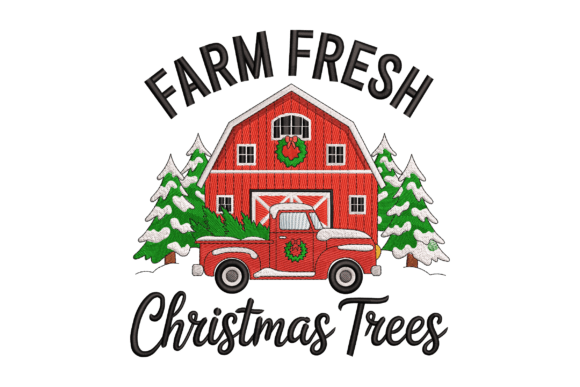
The moment I loaded the file into my software, the layout of Farm Fresh Christmas stood out for its balanced composition. Unlike many holiday designs that rely heavily on dense, solid fills which can pucker fabric, this design appears to utilize a thoughtful mix of stitch types. The visual personality is warm and inviting, evoking images of farmhouse kitchens, vintage trucks, and hand-picked greenery. It avoids the overly commercial, glossy look of big-box store decorations, leaning instead into a handmade aesthetic that appeals to modern crafters.
The mood it creates is one of nostalgic comfort. For an Etsy seller or boutique owner, this is crucial. Customers are increasingly drawn to items that feel personal and artisanal. The shape and theme suggest a connection to nature and tradition, making it an ideal candidate for products that emphasize slow living and heartfelt gifting. The detail level is moderate, avoiding microscopic elements that often get lost in stitching while maintaining enough intricacy to look professional and high-value.
Real-World Application Scenarios
To truly understand the value of an embroidery file, you have to imagine it stitched out. I visualized Farm Fresh Christmas on several different substrates to gauge its versatility.
- Custom Apparel: On a heather grey sweatshirt, the design would likely pop nicely if paired with traditional reds and greens. The sweatshirt embroidery market is huge during the holidays, and this design fits the trend of subtle, festive branding rather than loud, all-over prints.
- Tote Bags and Aprons: This is perhaps the strongest use case. A natural cotton canvas tote bag design featuring this motif would sell well at craft fairs. The rustic theme complements the texture of unbleached cotton perfectly. Similarly, an apron with this embroidery makes for an excellent hostess gift.
- Home Decor: Imagine this stitched onto a linen pillow cover or a flour sack tea towel. The holiday embroidery theme works seamlessly here, adding a touch of seasonal charm without being overwhelming. It is subtle enough to stay up through January for those who prefer a longer winter decor season.
- Baby Items: For baby embroidery, such as a bib or a blanket border, the design’s softness is an asset. However, care must be taken with scale to ensure it does not dominate the small surface area.
Technical Performance and Stitching Considerations
From a technical standpoint, the success of any embroidery project depends on execution. While I cannot specify the exact stitch count or density without inspecting the specific file data, I can offer general guidance based on the visual complexity of Farm Fresh Christmas.
If the design relies heavily on fill stitch areas, you must pay attention to stitch density. High density on stretchy fabrics like jersey knits can cause tunneling or distortion. In such cases, using a cut-away stabilizer is non-negotiable. If the design incorporates satin stitch borders or text, ensure your machine tension is calibrated correctly to prevent thread breaks or looping. Running stitch elements, often used for outlines or fine details, require smooth fabric surfaces to look crisp.
One area where caution is needed is with textured fabrics. If you are stitching on a waffle-knit towel or a thick wool blanket, the finer details of the design might get lost in the fabric pile. Always test on scrap fabric first. This is a golden rule for any professional craft business. Additionally, if the design includes small lettering or intricate corners, verify that your needle size is appropriate. A universal 75/11 needle is standard, but a sharp needle might be better for tightly woven fabrics to ensure clean entry and exit points.
Navigating Challenges: Fabric and Hoop Constraints
Not every project is a perfect match. When working with dark fabric, consider how the thread colors will contrast. Rustic palettes often include muted tones, which may vanish against black or navy blue. You might need to adjust the color sequence in your software to ensure visibility. For curved surfaces like caps, the rigidity of the design matters. If Farm Fresh Christmas has a large, solid footprint, it may not conform well to the front panel of a baseball cap without significant stabilization and possibly a foam backing.
Small hoop sizes also present a challenge. If you are restricted to a 4x4 inch hoop, check if the design fits comfortably with adequate margin for hooping. Cramping a design near the edge can lead to hoop burns or uneven stitching. For layered garments, such as a jacket with a lining, ensure you have enough clearance for the presser foot and that the layers do not shift during stitching.
Enhancing Brand Value and Customer Trust
For small shop product creators, the quality of your digital assets directly impacts your brand perception. Using a well-balanced design like Farm Fresh Christmas signals professionalism. It shows that you care about the finish and durability of your handmade product. When customers receive a personalized gift that looks polished and intentional, they are more likely to leave positive reviews and return for future purchases.
This design also lends itself well to printable mockup creation. Before you even stitch a single thread, you can create compelling social media content by placing the design on digital templates of mugs, shirts, or bags. This helps in pre-selling items and gauging customer interest. Consistent use of cohesive design assets builds brand recognition. If your shop specializes in rustic or farmhouse styles, this design asset fits perfectly into that narrative, reinforcing your niche authority.
Final Designer Notes and Best Practices
Before you commit to a large production run or list this as a commercial embroidery item, take these practical steps:
- Check Licensing: Confirm whether the license allows for physical sales, digital resale, or both. Never assume. Protect your craft business by adhering to the creator's terms.
- Test Thread Combinations: Don't just use the default color map. Experiment with variegated threads for a more organic, hand-dyed look that enhances the "farm fresh" vibe.
- Inspect in Black and White: View the design in grayscale to check for contrast issues. If elements blend together in black and white, they may lack definition in low-light settings or on certain fabrics.
- Wash Testing: Stitch a sample, wash it, and dry it. Check for shrinkage, thread bleeding, or puckering. This step is vital for maintaining customer trust and ensuring your finished product lasts.
In conclusion, Farm Fresh Christmas offers a versatile and aesthetically pleasing option for holiday crafting. With careful attention to fabric choice, stabilization, and thread selection, it can elevate your custom apparel and home decor offerings. It is a design that rewards thoughtful execution, turning a simple digital embroidery file into a cherished keepsake.